

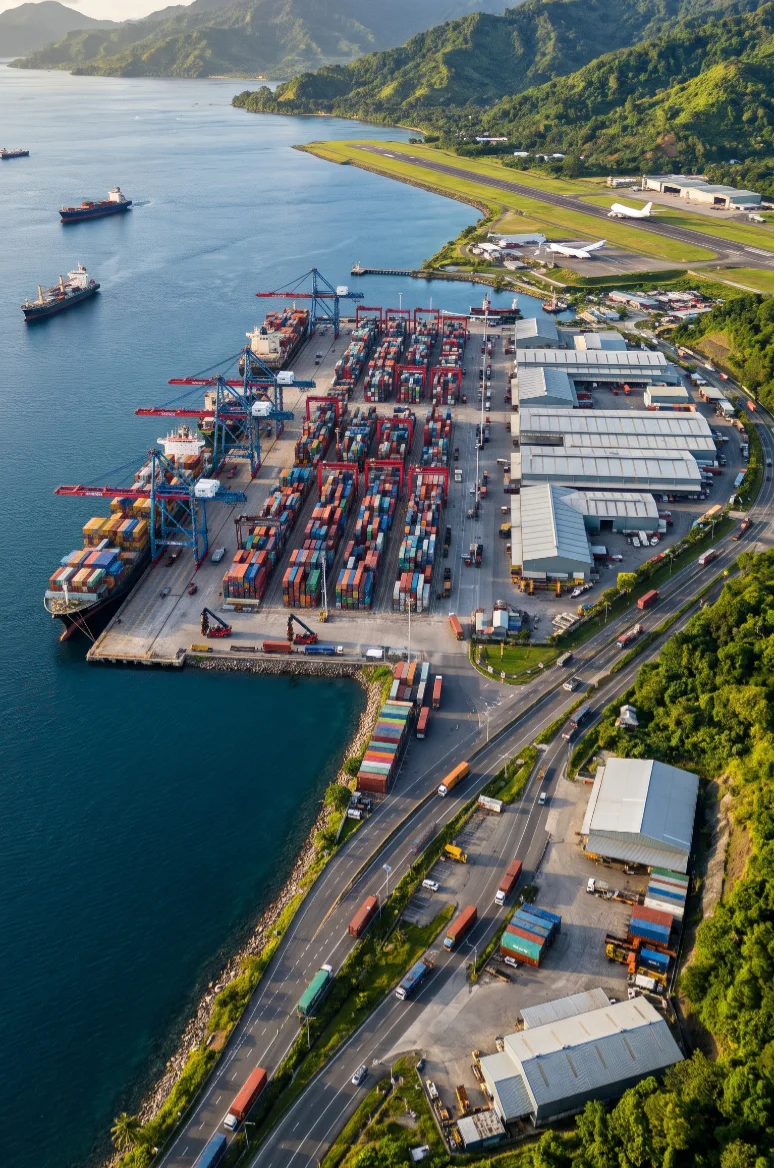
1. What Is Global Air Freight Shipping?
Global air freight shipping is the international transportation of commercial goods by aircraft. It is commonly used for shipments that require shorter transportation lead times, greater schedule flexibility or access to destinations where other transportation options are less practical.
The term international air cargo refers to goods transported through the air cargo network. These goods can include manufactured products, electronics, industrial components, medical supplies, pharmaceuticals, fashion products, perishables, spare parts and specialised equipment.
Unlike passenger baggage, commercial air cargo moves through a structured freight forwarding and airline handling system. Shipments are booked, documented, weighed, measured, screened, consolidated where appropriate, loaded onto aircraft, cleared through customs and delivered to their final destination.
How Is Air Freight Different From Other Shipping Methods?
Air freight differs from sea freight and road transportation primarily in its transport network, capacity, pricing structure and operational requirements.
Aircraft offer rapid international movement, but available cargo space is limited by aircraft configuration, weight restrictions, cargo dimensions, flight schedules and airline capacity. These constraints make careful shipment planning particularly important.
International air freight is generally selected when the commercial value of speed, reliability or reduced inventory time justifies its higher transportation cost relative to most ocean freight options.
Who Is Involved in International Air Cargo Transportation?
Several parties contribute to a typical international air freight movement:
- Exporter or shipper: The business or individual supplying and preparing the goods for international transport.
- Importer or consignee: The receiving party responsible for taking delivery and meeting applicable import obligations.
- Freight forwarder: The logistics intermediary organising transportation, bookings, documentation, handling and coordination.
- Airline or air cargo carrier: The operator providing aircraft capacity and transporting the cargo between airports.
- Ground handling agent: The facility or service provider managing cargo acceptance, storage, loading and unloading.
- Customs broker: A specialist who prepares and lodges customs declarations on behalf of an importer or exporter.
- Border authorities: Government agencies responsible for customs, security, biosecurity and other regulatory controls.
- Final-mile carrier: The transport provider delivering the shipment from the destination facility to the consignee.
Important distinction: Air freight transportation and freight forwarding are related but different services. An airline operates the aircraft, while a freight forwarder organises the broader shipment. A forwarder may also coordinate customs brokers, warehouse operators, domestic transport and last-mile delivery.
2. How Does Global Air Freight Shipping Work?
Understanding how international air freight shipping works starts with recognising that an international shipment travels through several independent operational stages. A shipment does not simply move from one airport to another immediately after a booking is confirmed.
The process normally begins when an exporter requests a freight quotation. The forwarder evaluates the cargo dimensions, gross weight, origin, destination, commodity, required delivery arrangements and any applicable regulatory restrictions.
Once the booking is confirmed, the goods are collected or delivered to the origin cargo facility. The shipment is checked, documented, screened and prepared for loading. Following export formalities, the airline transports the cargo to its destination airport, either directly or through a transit hub.
On arrival, the shipment is unloaded, processed, reported to the relevant authorities, presented for customs and any required biosecurity inspection, and released for collection or onward transportation.
The Main Stages of an International Air Freight Shipment
- Quotation and shipment assessment The forwarder reviews the commodity, dimensions, weight, packaging, origin, destination, service requirements and shipping terms.
- Space reservation and booking Cargo space is requested with an airline or its appointed agent. The booking confirms the intended routing, scheduled service and applicable shipment conditions.
- Collection and origin handling Goods are collected from the supplier or delivered to the cargo terminal, where their packaging, dimensions, weight and documentation are checked.
- Export documentation and security clearance Relevant export declarations, permits and supporting documents are prepared. Cargo undergoes the applicable aviation security and acceptance procedures.
- Aircraft loading and departure The cargo is allocated to an available aircraft, loaded according to operational restrictions and transported to its destination or transit airport.
- Transhipment and transfer handling Where the itinerary involves a connection, cargo is transferred between flights, terminals or airline handling systems.
- Arrival and destination handling The destination terminal unloads, processes and makes the shipment available for relevant customs and regulatory procedures.
- Import customs clearance The importer or their customs broker handles the applicable customs declaration, duties, taxes, permits and inspections.
- Collection and final-mile delivery After all required releases, cargo is collected or delivered to the consignee's warehouse, distribution centre or nominated address.
Every stage can influence the final delivery date. A flight may arrive on schedule while cargo remains in a terminal awaiting customs documentation, payment, inspection, handling or collection arrangements.
This is why an international freight quotation should distinguish the flight journey from the complete door-to-door logistics process.
3. Aircraft Capacity: Passenger Aircraft vs Dedicated Cargo Planes
International air cargo is transported primarily using two aircraft capacity models: passenger aircraft with cargo space in their lower holds, and dedicated freighter aircraft designed or configured to carry commercial cargo.
Passenger Aircraft Belly Cargo
Many passenger aircraft have cargo compartments beneath their passenger cabin. These compartments, commonly described as belly cargo capacity, allow airlines to transport commercial goods alongside passenger baggage.
Belly cargo provides access to passenger flight networks and can offer useful connections between major international cities. However, available cargo capacity depends on aircraft type, passenger baggage requirements, fuel load, route conditions and airline operational decisions.
Not every passenger aircraft can accommodate every shipment. Cargo must fit approved loading equipment and aircraft compartment contours, and dangerous goods restrictions may differ between passenger and cargo aircraft.
Dedicated Air Freighter Networks
Dedicated cargo aircraft carry freight rather than passenger baggage. Their configurations may provide larger loading doors, different cargo compartment arrangements and the ability to transport certain shipments unsuitable for passenger aircraft.
Freighter aircraft are particularly relevant for high-volume consignments, industrial equipment, heavy shipments, oversized pieces and specialised project cargo.
However, a freighter is not automatically available for every destination. Capacity depends on the carrier's network, scheduled services, operating permissions, route economics and aircraft availability.
| Consideration | Passenger Belly Cargo | Dedicated Freighter |
|---|---|---|
| Aircraft purpose | Passenger and cargo transport | Commercial cargo transportation |
| Capacity | Depends on available lower-hold space | Designed around freight capacity |
| Cargo dimensions | Subject to smaller hold doors and contours on many aircraft | May accommodate larger and specialised cargo |
| Route network | Uses passenger flight network | Uses dedicated cargo network |
| Typical applications | General commercial shipments and smaller consignments | Heavy, large-volume and specialised freight |
Direct Flights vs Transhipment
A direct air freight routing connects the origin and destination without transferring the cargo to another flight at an intermediate airport. A shipment may also travel on a direct flight even when the aircraft makes an intermediate stop, provided the cargo is not transferred to another aircraft. The distinction between a direct flight and a non-stop flight is therefore important.
A transhipment routing involves moving cargo through one or more intermediate airports before it reaches its final destination. Freight may transfer between aircraft, airlines or cargo handling facilities.
Transhipment can provide access to destinations without direct services and may improve available capacity or pricing. However, every transfer introduces additional handling and scheduling dependencies.
| Factor | Direct Routing | Transhipment Routing |
|---|---|---|
| Flight connections | No aircraft transfer required | One or more transfers |
| Handling complexity | Generally fewer transfer events | Additional transfer coordination |
| Destination access | Limited to available direct connections | Can reach destinations through hub networks |
| Operational risk | Fewer connection-related failure points | Connection and missed-transfer risks |
| Pricing | Depends on route and capacity | May offer different rate options |
Unit Load Devices and Cargo Capacity
Airlines use specialised loading equipment called Unit Load Devices (ULDs) to transport cargo efficiently. ULDs include aircraft containers and pallets that allow multiple packages to be assembled into a single loading unit.
The choice of ULD depends on aircraft compatibility, available compartment space, maximum loading weight, package dimensions and the shape of the cargo.
Oversized cargo cannot automatically be accepted just because its weight falls within an aircraft's maximum payload. Door dimensions, loading equipment, internal contours and load distribution can all prevent acceptance.
4. Types of International Air Freight Services
Businesses can choose between different international air freight service arrangements. The appropriate option depends on shipment urgency, cargo characteristics, operational requirements and the extent of logistics support required.
Standard Air Freight
Standard air freight uses scheduled cargo capacity without prioritising the shipment as an emergency or premium express movement. It is commonly suitable for routine commercial consignments, inventory replenishment, manufacturing components and general merchandise.
Standard services may involve direct or connecting flights, depending on the chosen route and available airline capacity.
Express Air Freight
Express air freight prioritises faster collection, processing, transportation or delivery through a dedicated express service arrangement.
Depending on the provider, the service may include integrated pickup, priority handling, customs coordination and final delivery. Express does not mean every shipment will automatically receive an uninterrupted direct flight.
Deferred and Expedited Air Cargo
Some logistics providers offer different service levels within their air cargo network. An expedited shipment receives priority in accordance with the contracted service, while deferred cargo may use less time-sensitive capacity or routing.
The commercial decision is whether the additional cost of priority transportation produces sufficient value through reduced stock shortages, faster customer fulfilment or avoided production downtime.
Air Freight Consolidation
Freight consolidation combines compatible shipments from different customers or suppliers into a larger consolidated movement.
Rather than purchasing an individual airline movement for every small shipment, a freight forwarder may group consignments into a consolidated air cargo shipment. Each customer retains their own shipment documentation and delivery arrangements as appropriate.
Consolidation can improve space utilisation and provide access to more competitive transportation economics for smaller consignments. However, it introduces additional coordination, deconsolidation and handling requirements.
The suitability of consolidation depends on commodity compatibility, delivery urgency, destination arrangements, cargo acceptance conditions and the forwarder's consolidation schedule.
Door-to-Door vs Airport-to-Airport Air Freight
Air freight can be purchased with different origin and destination responsibilities. Understanding these service boundaries is important when comparing quotations.
| Service | What It Generally Covers | Who Arranges the Remaining Movement? |
|---|---|---|
| Airport-to-airport | Transportation between the nominated origin and destination airports, subject to the quoted handling scope. | Shipper and consignee arrange other services. |
| Door-to-airport | Collection from the origin address and transportation to the destination airport. | Consignee arranges destination clearance and delivery. |
| Airport-to-door | Airport-to-airport transport with specified destination handling and final delivery. | Shipper arranges origin collection and export-side services. |
| Door-to-door | Coordinated origin pickup, international transport and destination delivery. | The provider coordinates the agreed transportation scope, while customs obligations depend on the contract and Incoterm. |
5. The Complete International Air Freight Shipping Process
Businesses importing or exporting commercial goods should understand the practical sequence of international air cargo transportation before the goods leave the supplier's premises.
Step 1: Determine Shipment Requirements
Before requesting a freight quotation, establish the fundamental shipment information:
- Exact origin and destination addresses.
- Airport of departure and intended destination airport, if known.
- Commodity description and intended use.
- Number of packages and packaging type.
- Dimensions of every package.
- Gross weight of every package.
- Whether the cargo is dangerous, restricted, fragile, perishable or oversized.
- Required dispatch date and delivery expectations.
- Customs documentation, permits and certification requirements.
- Applicable Incoterm and responsibilities of the buyer and seller.
Accurate information at this stage helps the freight forwarder identify suitable aircraft capacity, determine the chargeable weight and avoid quotations based on incorrect assumptions.
Step 2: Obtain and Compare Freight Quotations
A freight quotation should identify the origin, destination, proposed routing, service level, chargeable weight, rate basis, applicable surcharges and handling charges.
Ask whether the price covers:
- Origin pickup and collection.
- Origin terminal handling.
- Export customs clearance.
- Airline transportation.
- Fuel and security surcharges.
- Destination terminal handling.
- Import customs brokerage.
- Biosecurity inspections or other regulatory costs, where applicable.
- Final delivery to the consignee.
A quotation with a lower airline rate can still produce a higher total landed logistics cost if it excludes significant origin, destination or clearance charges.
Step 3: Confirm the Booking
Once the quotation and service scope are accepted, the forwarder requests airline capacity. The booking confirmation should identify the intended route, flight information where available, cargo acceptance conditions, cut-off times and handling instructions.
Cargo space is not the same as confirmed physical acceptance. The shipment must still meet airline requirements when presented at the cargo terminal.
Step 4: Prepare the Cargo and Packaging
Packaging must protect the goods throughout collection, terminal handling, screening, loading, transfer and unloading.
Use packaging that can withstand the expected handling environment. Fragile products require suitable internal protection, while heavy cargo needs secure and balanced load distribution.
Every package should carry clear shipping marks and handling instructions where appropriate. The package labels, commercial invoice, packing list and shipping instructions must describe the same goods accurately.
Step 5: Complete Origin Customs and Cargo Security Requirements
Depending on the country, commodity and transaction, export declarations, permits, certificates and other regulatory documents may be required.
Aviation security procedures are a separate operational requirement. Cargo may need to pass an approved screening process or be presented through an authorised secure supply chain before airline acceptance.
Customs export clearance and aviation security clearance should not be treated as the same procedure.
Step 6: Air Transportation and Transfers
After acceptance, the cargo is allocated to an aircraft and moves through the scheduled air cargo network.
If the booking includes a transit hub, the shipment is transferred to the connecting service. The handling and connection process must preserve the cargo's identity and relevant handling conditions.
Step 7: Destination Customs and Regulatory Clearance
When the shipment arrives, the destination authorities may assess the shipment details, customs declaration, tariff classification, valuation, permits and any applicable regulatory conditions.
Some consignments may require physical examination, documentation checks, testing or additional approvals. Clearance is not guaranteed simply because a cargo flight has arrived.
Step 8: Final Delivery and Proof of Delivery
Following the necessary releases and payment of applicable charges, the shipment can be collected or delivered according to the service arrangement.
The consignee should inspect the packages, record visible damage or shortages, and obtain proof of delivery. Any discrepancies should be reported promptly in accordance with the carrier's and insurer's procedures.
6. How Much Does International Air Freight Cost Per Kg?
One of the most common questions from importers and exporters is how much international air freight costs per kilogram.
There is no single worldwide air freight price per kilogram. Rates change according to the origin and destination, airline availability, shipping season, shipment density, service level, commodity restrictions and the amount of cargo being transported.
An air freight quotation is also more complicated than multiplying the physical weight of the goods by a published price. Airlines and freight providers commonly price general cargo using chargeable weight, which accounts for both actual gross weight and shipment volume.
What Determines International Air Freight Rates?
The most important pricing factors include:
- Origin and destination: The available airline network, flight connections, handling infrastructure and trade lane influence the quotation.
- Chargeable weight: The higher of the applicable gross or volumetric weight forms the normal billing basis for general air cargo.
- Service level: Express, standard, deferred and specialised services may carry different pricing structures.
- Airline capacity: Available space, passenger traffic, dedicated freighter capacity and market demand influence rates.
- Commodity type: Perishable, dangerous, temperature-controlled and oversized goods can require specialised handling.
- Seasonality: Peak export periods and changing cargo demand can affect available space and commercial rates.
- Route complexity: Direct services and connections may have different operating and handling costs.
- Local charges: Terminal handling, security, documentation and destination service charges affect the final amount.
Understanding the Components of an Air Freight Quote
| Cost Component | What It Covers |
|---|---|
| Air freight rate | The airline transportation charge, typically quoted against chargeable weight. |
| Fuel surcharge | A carrier or provider surcharge associated with fuel costs under its applicable pricing structure. |
| Security surcharge | Charges associated with applicable cargo security and related handling requirements. |
| Origin terminal handling | Acceptance, handling and processing of the consignment at the origin cargo facility. |
| Documentation charges | Preparation and processing of transport and shipping documentation. |
| Export customs clearance | Customs broker services and applicable declaration-related charges. |
| Destination terminal handling | Unloading, terminal processing, storage and handling services at destination. |
| Customs brokerage | Import declarations, customs processing and related professional services. |
| Import duties and GST | Government taxes and duties assessed according to the commodity, value and applicable law. |
| Insurance | Optional or contractually arranged cargo insurance, depending on the shipment and coverage. |
| Last-mile delivery | Transportation from the destination terminal or warehouse to the consignee's premises. |
Air Freight Pricing Example
Consider a business importing commercial components from an overseas supplier to Australia. The forwarder offers a quoted airline rate against the shipment's chargeable weight and separately identifies the origin, destination and additional service charges.
In this situation, the freight cost must be evaluated as a complete shipment cost rather than simply comparing the airline rate.
Airline Freight + Origin Charges + Surcharges + Destination Charges + Clearance + Applicable Taxes + Delivery
This is a planning framework rather than a universal invoice formula. Actual quotation structures differ between airlines, forwarders and service agreements.
7. Air Freight Chargeable Weight: Actual, Gross and Volumetric Weight
Chargeable weight is one of the most important concepts in international air freight pricing.
Airlines must consider both the physical weight and the amount of aircraft space occupied by a shipment. A large package containing lightweight products can consume significant cargo capacity even though the goods themselves weigh relatively little.
For this reason, general air cargo is commonly priced using whichever is higher: the shipment's gross actual weight or its volumetric weight, subject to the carrier's applicable rating and rounding rules.
Actual Weight
Actual weight refers to the physical measured weight of the shipment. For billing, the relevant comparison is generally the gross weight of the packed consignment, including cartons, pallets and other packaging.
Net weight refers to the weight of the products themselves without packaging. It should not be confused with the gross weight used for normal air cargo chargeable-weight calculations.
Gross Weight
Gross weight includes the product and the packaging used to transport it. For example, a shipment consisting of machinery, protective wrapping, a wooden crate and securing materials has a gross weight that includes all those components.
Accurate gross weight measurements are important for airline acceptance, cargo reporting, load planning and pricing.
Volumetric Weight or Dimensional Weight
Volumetric weight, sometimes called dimensional weight, represents the space occupied by the shipment converted into an equivalent billing weight.
A commonly used air cargo reference divisor is 6,000 cubic centimetres per kilogram. However, the divisor and rating rules must always be confirmed against the specific airline tariff, service and shipment conditions.
How to Calculate Air Freight Chargeable Weight
The calculation normally follows two steps: first calculate the shipment's volumetric weight, then compare it against its gross actual weight.
(Length × Width × Height in cm) ÷ 6,000
For a shipment containing multiple packages, calculate the volume of each package and add the results before applying the appropriate divisor. Confirm any rounding and package-measurement rules with the forwarder.
Practical Volumetric Weight Calculation Example
Assume a shipment contains one carton with these dimensions:
- Length: 100 cm
- Width: 80 cm
- Height: 60 cm
- Gross weight: 55 kg
First, calculate its cubic volume:
Next, divide the total volume by the example divisor:
The shipment therefore has an illustrative volumetric weight of 80 kg, compared with its actual gross weight of 55 kg.
Since the volumetric weight is higher, its illustrative chargeable weight is 80 kg under this rating method.
| Measurement | Result |
|---|---|
| Gross actual weight | 55 kg |
| Carton volume | 480,000 cm³ |
| Illustrative divisor | 6,000 cm³/kg |
| Volumetric weight | 80 kg |
| Illustrative chargeable weight | 80 kg |
Understanding Cubic Metres (CBM) in Air Freight
CBM stands for cubic metres and is a measurement of shipment volume commonly used in international logistics.
One cubic metre is equivalent to 1,000,000 cubic centimetres. Under the illustrative 6,000 cm³/kg volumetric divisor, one cubic metre converts to approximately 166.67 kg of volumetric weight.
This relationship helps logistics professionals compare shipment density, estimate air cargo billing weight and assess whether different packaging configurations could reduce transportation costs.
Why Packaging Dimensions Matter
Packaging can significantly affect air freight costs. Unnecessary empty space, oversized cartons and poorly designed pallets can increase the chargeable weight without increasing the commercial quantity of goods being transported.
Businesses should measure the final packed shipment rather than relying exclusively on product dimensions supplied by a manufacturer.
8. How Long Does International Air Freight Take?
The time required for international air freight depends on the complete transportation route, not just the duration of the aircraft's flight.
A shipment can arrive at its destination airport relatively quickly but still require additional time for cargo terminal handling, customs processing, biosecurity inspections, documentation checks and final delivery.
Factors That Influence International Air Freight Transit Time
- Direct or connecting flights: Transhipment routes depend on the availability and timing of connecting services.
- Airline schedules: Departure frequency and operating schedules affect the earliest available transportation opportunity.
- Cargo cut-off times: Cargo must reach the terminal and meet acceptance deadlines before departure.
- Airline capacity: Space availability may affect booking confirmation and departure arrangements.
- Origin processing: Screening, export documentation and terminal handling must be completed.
- Destination handling: Unloading, cargo availability and terminal processing affect release timing.
- Customs and regulatory clearance: Documentation queries, inspections and permits may extend the overall process.
- Final delivery: The delivery destination, local transport arrangements and collection availability influence the total lead time.
Airport-to-Airport Transit vs Door-to-Door Lead Time
It is important to ask whether a quoted transit time refers to scheduled airport-to-airport transportation or the complete door-to-door movement.
Airport-to-airport transit generally relates to the airline transportation and associated airport handling scope specified in the quotation. Door-to-door lead time also includes collection, origin handling, export procedures, destination release and final delivery.
Businesses shipping urgent inventory should also consider the consequences of a missed connection, a cancelled flight or a regulatory hold. Delivery commitments should include an appropriate contingency rather than relying solely on the most optimistic flight schedule.
9. Documents Required for International Air Freight Shipping
Correct documentation is essential for commercial air freight. Shipping documents communicate the identity of the goods, the parties involved, the value of the transaction, the transportation arrangements and any regulatory information required by authorities.
The exact documents required depend on the origin country, destination country, commodity, shipment value, Incoterm and applicable import or export regulations.
Air Waybill (AWB)
The Air Waybill is the principal transport document for an air cargo shipment. It records important shipment details, including the shipper, consignee, routing, package information, declared cargo details and applicable carriage information.
An AWB is generally a non-negotiable transport document rather than a negotiable document of title. It is used to identify and manage the shipment throughout the airline cargo process.
Master Air Waybill (MAWB)
A Master Air Waybill is issued by the airline or its authorised agent to the freight forwarder or contracting party in the carrier's transport arrangement.
It identifies the master-level air cargo movement between the relevant transport parties and is particularly important in consolidated air freight operations.
House Air Waybill (HAWB)
A House Air Waybill is issued by the freight forwarder to its customer for an individual consignment within the forwarding arrangement.
Where multiple customer consignments are consolidated, separate HAWBs may exist under a corresponding MAWB.
| Document | Issued or Prepared By | Primary Function |
|---|---|---|
| AWB | Airline or forwarding party, depending on the document level | Air cargo transportation record. |
| MAWB | Airline or authorised carrier agent | Master carrier-level consignment record. |
| HAWB | Freight forwarder | Individual customer consignment record. |
| Commercial invoice | Exporter or seller | Transaction, product, value and commercial details. |
| Packing list | Exporter or packer | Package count, contents, weight and dimensions. |
Commercial Invoice
The commercial invoice records the transaction between the buyer and seller. It normally includes the following information:
- Exporter and importer details.
- Invoice number and date.
- Detailed description of the goods.
- Quantity and unit of measurement.
- Unit price and total transaction value.
- Currency of the transaction.
- Country of origin, where required.
- Relevant Incoterm and named place.
- Any other information required for customs or regulatory purposes.
Packing List
The packing list describes how the goods have been packaged for transport. It should identify the number of packages, package descriptions, individual or consolidated weights, dimensions and other relevant shipment details.
A detailed packing list is particularly important for multi-package consignments, consolidated shipments and goods subject to physical inspection.
HS Codes and Customs Classification
Harmonised System (HS) codes are used internationally to classify traded goods. Correct classification is important because it influences customs duties, statistical reporting, import restrictions, permits and other trade requirements.
The international Harmonised System establishes a common classification structure, while individual countries use their own extended tariff nomenclature for national customs purposes.
Australian importers should verify the applicable tariff classification through the Australian Border Force's Current Working Tariff and obtain professional classification advice where required.
Other Supporting Shipping Documents
Depending on the shipment, additional documents may include:
- Certificate of origin.
- Export declaration and export permit.
- Import permit and regulatory approval.
- Product safety and compliance certificates.
- Phytosanitary or health certificates.
- Fumigation or treatment certificates.
- Safety Data Sheet (SDS) for relevant products.
- Dangerous Goods Declaration, where required.
- Temperature records or other specialised cargo documentation.
- Insurance certificate, where applicable.
Incoterms and Responsibilities in International Shipping
Incoterms are internationally recognised trade terms published by the International Chamber of Commerce. They define important responsibilities and cost allocation between buyers and sellers in international transactions.
Some commonly used terms for air freight and other forms of transport include:
- EXW (Ex Works): The seller makes the goods available at the agreed premises. The buyer assumes extensive transport and export-related responsibilities, subject to the practical and legal arrangements required.
- FCA (Free Carrier): The seller delivers the goods to the carrier or another nominated party at the agreed location.
- CPT (Carriage Paid To): The seller pays carriage to the named destination, while risk transfers according to the Incoterm's delivery point.
- CIP (Carriage and Insurance Paid To): Similar to CPT, but the seller must also arrange the required cargo insurance under the applicable Incoterm rules.
- DAP (Delivered at Place): The seller arranges delivery to the named destination, with the buyer generally responsible for import clearance and import duties and taxes.
- DPU (Delivered at Place Unloaded): The seller arranges delivery and unloading at the named destination, with the buyer responsible for import formalities.
- DDP (Delivered Duty Paid): The seller assumes extensive responsibility, including import clearance and applicable duties and taxes, subject to their legal ability to fulfil those obligations in the destination country.
FOB, CFR and CIF are intended for sea and inland waterway transport, not ordinary air freight shipments. For air cargo transactions, the appropriate multimodal or other transport-specific Incoterm should be selected.
Documentation principle: The commercial invoice, packing list, customs declaration and air waybill should describe the same shipment consistently. Inaccurate commodity descriptions, incorrect values, missing package information and inconsistent weights can trigger queries, inspections and clearance delays.
10. International Air Freight Shipping to Australia
Importing goods into Australia requires businesses to coordinate transportation, Australian Border Force (ABF) customs requirements and, where applicable, biosecurity controls administered by the Department of Agriculture, Fisheries and Forestry (DAFF).
Australia's border framework is designed to manage customs revenue, prohibited imports, community protection, agricultural biosecurity and food safety. The fact that a supplier has successfully shipped a product overseas does not mean the same goods can automatically be imported into Australia.
Australian International Air Freight Gateways
Common international air cargo gateways used by Australian businesses include:
- Sydney Airport (SYD): A major international aviation and cargo gateway serving New South Wales and eastern Australian supply chains.
- Melbourne Airport (MEL): A major international freight gateway serving Victoria and surrounding commercial and industrial markets.
- Brisbane Airport (BNE): An important international cargo entry and departure point for Queensland.
- Perth Airport (PER): A significant gateway for Western Australian trade and international air freight connections.
- Adelaide Airport (ADL): An international gateway supporting South Australian businesses and regional supply chains.
Other airports may also be relevant depending on the airline, cargo service, aircraft type and commodity. The selection of an airport should not be based on commercial convenience alone.
DAFF maintains an official list of designated biosecurity First Points of Entry. Some airports have permanent biosecurity services, while others have specific restrictions or permission requirements. Approved goods and operating conditions vary by location.
Before booking international air freight to Australia, verify the intended airport and commodity requirements through the official DAFF First Points of Entry airport list.
Australian Border Force (ABF) and Import Customs Clearance
The Australian Border Force administers customs controls for imported goods. Commercial importers must ensure that the correct declaration is lodged, relevant duties and taxes are assessed, and any applicable import restrictions or permits are satisfied.
The applicable declaration depends on the nature and value of the imported goods and the method by which they enter Australia.
Import Declaration (N10)
Under ABF guidance, an Import Declaration is generally required when a consignment arriving by air or sea has a combined customs value of more than AUD 1,000 and is being cleared into home consumption.
The declaration identifies the importer, goods, transport information, tariff classification and customs value. It is lodged through the Integrated Cargo System (ICS), normally by the importer or an authorised licensed customs broker.
Self-Assessed Clearance (SAC) Declaration
Air and sea cargo consignments valued at AUD 1,000 or less generally require an appropriate Self-Assessed Clearance declaration, subject to applicable exclusions and special requirements.
A low-value shipment should not automatically be treated as exempt from every tax, permit, prohibition or regulatory requirement. Certain goods are subject to additional controls regardless of their value.
Importers should consult the current ABF guidance on import declarations before arranging shipment.
Import Duties and Australian GST
Import duty depends on the relevant tariff classification, customs value, country of origin, preferential trade agreement eligibility and any applicable concession or exemption.
Australian GST is generally charged at 10% on taxable importations. The Value of the Taxable Importation (VoTI) includes:
- The customs value of the imported goods.
- Any customs duty payable.
- International transport and insurance costs to the relevant Australian destination, to the extent not already included in the customs value.
- Wine Equalisation Tax (WET), if applicable.
Eligible importers may be able to use the approved GST deferral arrangements, subject to the relevant requirements.
The ABF provides the official calculation framework in its GST and other taxes when importing guidance.
Air Cargo Reporting Requirements in Australia
International air cargo arriving in Australia is subject to statutory cargo reporting requirements. The cargo reporting framework identifies the goods being transported, relevant consignments and the parties involved.
Airlines and other authorised cargo reporters have responsibilities for submitting the required information. Depending on the forwarding arrangement, freight forwarders can also have reporting obligations at house air waybill level.
ABF guidance generally requires an Air Cargo Report to be lodged at least two hours before the estimated time of arrival at the first Australian port, with shorter timeframes applying to certain shorter journeys.
This reporting obligation is separate from the importer's customs declaration. Accurate MAWB and HAWB details, shipment descriptions, consignee information and package information help maintain consistency across the reporting process.
The relevant requirements are explained in the ABF cargo reporter obligations.
Department of Agriculture, Fisheries and Forestry (DAFF)
Customs clearance and biosecurity clearance are separate regulatory processes. Goods that satisfy customs requirements may still be subject to DAFF assessment, inspection, treatment or other biosecurity conditions.
Biosecurity risk can arise from the goods themselves or materials associated with their packaging, such as untreated timber, soil contamination, plant material, animal products and other biological contaminants.
Australian importers should identify potential biosecurity requirements before the supplier prepares and dispatches the consignment.
What Is BICON and Why Is It Important?
BICON stands for the Biosecurity Import Conditions system. It is the Australian Government's official system for identifying the biosecurity import conditions that apply to specified commodities entering Australia.
Importers can use BICON to determine whether a product:
- Is permitted to enter Australia.
- Is subject to specific import conditions.
- Requires an import permit.
- Needs supporting certificates or documentation.
- Requires treatment before or after arrival.
- Must undergo inspection or other regulatory procedures.
The correct BICON case depends on the actual commodity, its country of origin, the manufacturing or processing method, intended use and other details specified in the relevant import scenario.
A general product name may not provide enough information to identify the correct import conditions. Importers should select the appropriate commodity case and review the full requirements before committing to purchase and shipment.
When BICON specifies an import permit, the permit must be granted before the goods arrive. Applying for a permit does not automatically mean that it will be approved.
Official biosecurity resource: Search the Australian Government's BICON system before shipping goods to Australia. This is particularly important for food, agricultural products, plant materials, animal products, biological products and other regulated commodities.
Imported Food and the Imported Food Inspection Scheme
Food imported into Australia for commercial sale must meet relevant Australian food standards and food safety requirements.
DAFF administers the Imported Food Inspection Scheme (IFIS), a risk-based inspection and testing framework. Imported food may be referred for inspection, documentation checks, sampling or testing depending on its classification, risk category, origin and compliance history.
Food consignments selected for inspection must remain on hold until the relevant requirements have been satisfied and the appropriate release has been granted.
Timber Packaging and Biosecurity Requirements
Wooden packaging can introduce biosecurity risks when it carries insects, bark, soil or other contaminants.
Solid timber pallets, crates, skids and dunnage can be subject to applicable treatment and declaration conditions. Certain solid timber packaging must comply with ISPM 15 requirements or other relevant BICON conditions.
Importers should check the packaging material and relevant import conditions rather than assuming that standard export packaging will automatically be accepted.
The current conditions are available in DAFF's guidance on timber and bamboo packaging.
A Practical Australian Import Clearance Checklist
- Confirm that the product is legally permitted for import.
- Check BICON for applicable commodity-specific biosecurity requirements.
- Obtain required permits before shipment where necessary.
- Confirm the designated First Point of Entry for the goods.
- Prepare an accurate commercial invoice and packing list.
- Verify HS classification and customs valuation.
- Provide the correct MAWB and HAWB details.
- Confirm the appropriate import declaration or SAC procedure.
- Arrange customs brokerage and payment of relevant duties, GST and charges.
- Coordinate any required biosecurity or food inspections.
- Arrange cargo collection or final delivery after all necessary releases.
11. Air Freight Shipping From Australia to Overseas
Australian businesses exporting goods internationally must manage both the transportation requirements of the destination country and Australia's export control framework.
Air freight shipping from Australia to overseas markets may involve commercial products, manufactured goods, spare parts, industrial equipment, agricultural products, medical supplies and other commodities.
Australian Export Declaration Requirements
The Australian Border Force requires export reporting for relevant goods leaving Australia.
Under current ABF export guidance, an Export Declaration is generally required where goods:
- Have a value of more than AUD 2,000.
- Require an export permit, regardless of value.
- Are subject to a duty drawback claim.
- Are dutiable or excisable goods for which the relevant duty or excise duty remains unpaid.
Certain goods are exempt from requiring an Export Declaration, including specified goods below the applicable value threshold and other listed categories. Exemptions should not be assumed where permits, restrictions, duty drawback or other requirements apply.
Export declarations are generally lodged electronically through the Integrated Cargo System (ICS). They must be completed with accurate information about the goods and the export transaction before export.
Businesses can review the current ABF export requirements and Export Declaration guidance.
Destination Country Import Requirements
Australian export compliance is only one part of the process. The importer must also satisfy the destination country's customs, biosecurity, food safety, product standards and other regulatory requirements.
A shipment that can legally leave Australia may still be subject to restrictions or permit requirements when it reaches its destination.
Before dispatch, coordinate with the overseas buyer or receiving agent to verify:
- Whether the commodity is permitted for import.
- Applicable destination HS classification and import duties.
- Import permits and supporting certification.
- Any phytosanitary, health or treatment documentation.
- Local labelling and product compliance requirements.
- Customs broker availability and destination terminal procedures.
- Import tax obligations and final delivery arrangements.
International Air Cargo From Australia to the Asia-Pacific
Australian exporters often require international air freight services for regional trade involving New Zealand, Singapore, Malaysia, Indonesia, Hong Kong, Japan, South Korea and Pacific island markets.
The most appropriate route depends on available flight connections, cargo capacity, destination clearance conditions and the type of goods being exported.
For example, a business shipping commercial spare parts or time-sensitive industrial supplies to Papua New Guinea should evaluate airline routing, cargo handling, destination customs procedures and local delivery requirements together.
Businesses planning Freight to PNG should establish the exact collection location, destination, cargo dimensions, commodity description and import documentation requirements before requesting a shipping quotation.
Australian Export Shipping Checklist
- Confirm that the goods can legally be exported.
- Check whether an export permit or declaration is required.
- Prepare a commercial invoice and detailed packing list.
- Verify the destination country's import requirements.
- Check whether certificates of origin or other certificates are necessary.
- Confirm dangerous goods and airline acceptance conditions.
- Arrange export customs procedures and cargo screening.
- Confirm flight capacity, routing and destination handling.
- Coordinate import clearance with the overseas consignee.
- Keep transport records and export documentation.
12. Dangerous Goods and Air Freight Restrictions
Not every product can be transported through the international air cargo network using ordinary general cargo procedures.
Dangerous goods are substances or articles that can present risks to aircraft, passengers, crew, property or the environment during air transportation.
Some dangerous goods may be transported by air when the applicable classification, packaging, quantity limits, marking, labelling, documentation and handling requirements are satisfied. Other goods are prohibited or subject to strict restrictions.
Common Categories of Dangerous Goods
- Explosives and explosive articles.
- Gases, including certain compressed and liquefied gases.
- Flammable liquids.
- Flammable solids and substances liable to spontaneous combustion.
- Oxidising substances and organic peroxides.
- Toxic and infectious substances.
- Radioactive materials.
- Corrosive substances.
- Other regulated hazardous articles and substances.
Lithium Batteries and Electronic Equipment
Lithium batteries are particularly important in modern air cargo operations because they are commonly used in laptops, smartphones, tablets, power tools, industrial equipment, electronic devices and battery-powered products.
Depending on their configuration and classification, shipments may include:
- Lithium-ion batteries packed with equipment.
- Lithium-ion batteries contained in equipment.
- Lithium metal batteries.
- Standalone battery shipments.
- Equipment containing batteries, including portable electronic products.
These categories do not share identical transportation conditions. Applicable requirements depend on battery type, watt-hour or lithium content rating, configuration, packaging, state of charge where relevant, quantity, aircraft type and current regulatory provisions.
Shippers must correctly identify the battery configuration and comply with applicable packaging, marking, labelling, documentation and carrier acceptance requirements.
Australian Dangerous Goods Requirements
In Australia, Part 92 of the Civil Aviation Safety Regulations establishes requirements for the consignment and carriage of dangerous goods by air.
These requirements address matters including training, documentation, record keeping, incident reporting, packaging, marking, labelling, aircraft loading and stowage.
The Australian Civil Aviation Safety Authority (CASA) identifies the relevant requirements in its current Part 92 dangerous goods guidance.
International operators also need to comply with applicable ICAO Technical Instructions. The 2025–2026 edition of ICAO Doc 9284 applies to operations from 1 January 2025 through 31 December 2026.
IATA Dangerous Goods Regulations (DGR)
The International Air Transport Association publishes Dangerous Goods Regulations used throughout the commercial air cargo industry. The IATA DGR provides operational guidance for classifying, preparing, accepting and transporting regulated dangerous goods in accordance with applicable aviation safety requirements.
Airlines may also impose additional variations or more restrictive conditions. Therefore, checking the applicable airline requirements is essential before booking dangerous goods.
Dangerous Goods Declaration and Supporting Information
Where required, dangerous goods shipments must be accompanied by the applicable Shipper's Declaration for Dangerous Goods and supporting documentation.
The information must correctly identify the regulated substance or article, its classification, packaging requirements and other mandatory details.
Certain battery shipments may also require supporting test documentation, including evidence of compliance with relevant UN testing requirements where applicable.
Other Restricted or Prohibited Air Freight Goods
Other products may be restricted according to the airline, origin country, destination country or applicable government regulations. Examples include certain chemicals, aerosols, magnetic materials, batteries, biological substances, firearms, controlled goods and products requiring special permits.
A commodity that is not classified as dangerous goods may still be prohibited or restricted under customs or import legislation.
Always confirm both aviation acceptance requirements and destination-country import permissions before shipping.
13. Specialised Air Freight: Perishable, Temperature-Controlled and Oversized Cargo
Some products require additional planning beyond ordinary general cargo transportation. Their value, physical characteristics, shelf life, sensitivity or dimensions can influence how the shipment must be prepared and transported.
Perishable Cargo
Perishable goods are products that can deteriorate, lose quality or become unsuitable for their intended use if transportation conditions are not properly controlled.
Common examples include fresh produce, seafood, meat, flowers, certain food ingredients and other time-sensitive products.
Successful perishable air freight depends on appropriate packaging, temperature management, product preparation, cargo acceptance and coordination throughout the transportation process.
Temperature-Controlled Freight
Temperature-controlled freight is designed for goods that must remain within specified environmental conditions during storage and transportation.
This can include pharmaceuticals, medical products, biotechnology materials, temperature-sensitive chemicals and specialised food products.
A controlled-temperature service should specify the required temperature range, monitoring arrangements, handling responsibilities and contingency procedures.
The complete shipment should be considered, including collection, terminal storage, aircraft handling, transfers, destination clearance and final delivery.
Oversized and Heavy Cargo
Oversized air cargo includes packages that exceed ordinary handling dimensions or cannot fit standard ULD configurations.
Examples include industrial machinery, large equipment, engineering components, specialised vehicles and project cargo.
These shipments require a detailed technical assessment involving dimensions, gross weight, centre of gravity, load distribution, lifting points, aircraft cargo door dimensions and destination handling equipment.
A shipment may fit within an aircraft's theoretical maximum payload but still be unsuitable because of its physical dimensions or loading requirements.
Fragile and High-Value Cargo
Fragile goods and high-value consignments require appropriate packaging, security arrangements and risk management.
Shippers should clearly identify handling restrictions, use protective packaging and confirm whether additional security or cargo insurance is appropriate.
14. International Air Cargo Tracking and Shipment Visibility
International air cargo tracking allows shippers, forwarders and consignees to monitor shipment progress through the transportation network.
A tracking system generally uses the shipment reference, air waybill number or another carrier-specific identifier to retrieve available status events.
Common Air Freight Tracking Milestones
- Booking confirmed: Airline space has been requested and the booking information is recorded.
- Picked up: The cargo has been collected from the supplier or shipper.
- Received at origin: The shipment has arrived at the origin cargo terminal or warehouse.
- Accepted: Cargo has passed the applicable acceptance process.
- Departed: The shipment has left the origin airport on the scheduled flight.
- Arrived at transit airport: The aircraft has reached an intermediate cargo hub.
- Transferred or connecting: The consignment is being prepared for onward transportation.
- Arrived at destination: The aircraft has reached the destination airport.
- Available for clearance: Cargo has entered destination processing and release procedures.
- Customs released: The relevant customs authority has released the shipment, subject to any other applicable controls.
- Delivered: The shipment has reached its final delivery point.
Tracking events are not always updated in real time. Different airlines, terminal operators and freight forwarders use different systems, so status descriptions and update frequencies can vary.
Why Shipment Visibility Matters
Better visibility allows businesses to coordinate inventory planning, warehouse staffing, customer communication, production schedules and final delivery arrangements.
For time-sensitive cargo, visibility should extend beyond flight departure and arrival. Customs holds, transit handling, terminal availability and last-mile delivery also affect the shipment's actual progress.
15. International Air Freight Insurance and Risk Management
Cargo insurance protects the financial interests of businesses against covered losses or damage during international transportation.
Although airlines and freight providers operate under contractual and legal liability frameworks, carrier liability should not automatically be treated as equivalent to comprehensive cargo insurance.
Why International Air Freight Insurance Matters
International shipments can be exposed to several risks:
- Physical damage during handling or transportation.
- Loss or theft of goods.
- Damage caused by unsuitable packaging.
- Temperature excursions involving sensitive products.
- Missed connections or extended storage.
- Damage caused by external events during transit.
- Additional exposure during collection and final delivery.
The existence of these risks does not mean every incident is automatically insured. The available protection depends on the actual policy wording, insured value, exclusions, conditions and agreed transportation scope.
What Should Cargo Insurance Cover?
When arranging international freight insurance, businesses should examine the following elements:
- Insured value: Confirm the agreed basis of valuation and whether freight, additional costs or expected profit are included.
- Transit scope: Check whether coverage begins at the supplier's premises or another specified point and ends at the final delivery destination.
- Applicable exclusions: Review exclusions for inadequate packaging, inherent product defects, ordinary leakage, delay and other specified risks.
- Commodity restrictions: Confirm coverage for dangerous goods, temperature-controlled cargo and high-value products.
- Deductibles: Understand the excess payable when submitting a valid claim.
- Claims procedure: Know the notification period, supporting documents, inspection requirements and evidence needed.
How to Reduce Air Freight Cargo Risk
- Use packaging appropriate for the product and transport conditions.
- Verify gross weight, dimensions and package security.
- Declare goods accurately to the freight forwarder and airline.
- Use qualified personnel for dangerous goods preparation.
- Confirm handling and temperature requirements in writing.
- Use shipment tracking and delivery confirmation.
- Photograph goods and packaging before dispatch where appropriate.
- Keep commercial invoices, packing lists and transport records.
- Understand cargo insurance coverage before the shipment departs.
16. Air Freight vs Sea Freight for International Shipping
Choosing between air freight and sea freight is a commercial decision that should consider the total supply chain cost rather than transportation price alone.
Air freight generally provides faster international transportation and is useful for urgent shipments, valuable goods, lightweight inventory and time-sensitive production requirements.
Sea freight is commonly used for larger shipments, heavy cargo and businesses that can accommodate longer ocean transportation lead times.
Air Freight vs Sea Freight Comparison
| Factor | Air Freight | Sea Freight |
|---|---|---|
| Transportation speed | Generally faster international transportation. | Generally slower due to ocean transit and port processes. |
| Freight cost | Generally more expensive per unit of weight or volume. | Often more economical for large and heavy shipments. |
| Cargo capacity | Constrained by aircraft space, weight and dimensions. | Suitable for large volumes and heavy consignments. |
| Shipment frequency | Depends on available passenger and freighter schedules. | Depends on shipping line schedules and port networks. |
| Packaging | Must meet aircraft handling and safety requirements. | Must withstand longer handling and transportation conditions. |
| Ideal applications | Urgent, valuable and time-sensitive cargo. | Bulk, heavy and non-urgent shipments. |
| Inventory strategy | Can support shorter replenishment cycles. | Often supports planned bulk replenishment. |
When Should a Business Choose Air Freight?
Air freight is worth evaluating when:
- A production line requires an urgent replacement component.
- Retail inventory needs replenishment before an important sales period.
- Products have a limited shelf life.
- Customer orders have commercially important delivery deadlines.
- High-value products benefit from shorter transportation lead times.
- A smaller shipment does not justify an entire ocean freight movement.
- Inventory shortages or lost production could cost more than the additional air freight expense.
When Is Sea Freight the Better Option?
Sea freight is often more suitable when cargo is bulky, heavy, relatively low-value per unit of volume or can be included in planned inventory replenishment.
Businesses should also evaluate the complete ocean freight process, including port handling, customs, inland transportation, consolidation and delivery.
How to Make the Commercial Decision
Compare the total landed cost and the economic consequences of delivery time. A cheaper shipping method may create additional inventory carrying costs, stockout exposure, warehouse requirements or production downtime.
Conversely, the faster arrival of air cargo does not necessarily justify the cost when products are inexpensive, shipments are large or customers can wait.
Freight Cost + Inventory Cost + Time Sensitivity + Risk + Commercial Impact
17. How to Choose an International Air Freight Forwarder
Selecting an international air freight forwarder is an important business decision because the provider influences routing, operational coordination, documentation accuracy, customs communication and the overall shipment experience.
A competitive quotation is useful, but it should not be the only selection criterion.
Evaluate International Network Capability
Ask whether the forwarder has experience with the specific origin and destination markets involved in your trade. A provider handling international freight regularly should be able to explain available routes, connecting airports, destination partners and the handling processes involved.
For Australian importers and exporters, experience with local customs and DAFF procedures is especially valuable.
Assess Customs and Documentation Knowledge
A capable forwarder should understand the commercial documents and transport requirements involved in the shipment. The provider should also be able to identify when a shipment needs a specialised customs broker or regulatory clearance.
Do not assume that a freight forwarding company is automatically authorised to perform every customs declaration or regulatory activity. Ask who will carry out each task and who remains legally responsible.
Check Service Transparency
A reliable quotation should identify the transportation scope, route, chargeable weight, surcharges, excluded costs, destination arrangements and relevant service conditions.
The provider should be willing to explain how the total quotation has been calculated rather than presenting a single unexplained figure.
Questions to Ask Before Making a Decision
- Do you regularly handle shipments between my origin and destination?
- Which airlines or cargo networks will be considered?
- Is the proposed route direct or does it involve transhipment?
- How is chargeable weight calculated for my shipment?
- Are fuel, security and terminal charges included?
- Who prepares the export and import customs documentation?
- Does the destination require permits, treatment or inspection?
- How can I track my shipment throughout transportation?
- What happens if the booked flight is delayed or cancelled?
- Does the quotation include final delivery and insurance?
Freight Forwarder Selection Checklist
- Experience with the relevant international trade lane.
- Knowledge of air cargo booking and capacity.
- Understanding of Australian customs and biosecurity.
- Clear pricing and transparent quotation terms.
- Access to suitable destination handling partners.
- Appropriate dangerous goods and specialised cargo capabilities.
- Reliable shipment communication and tracking.
- Clear responsibility for customs, insurance and delivery.
- Documented escalation and claims procedures.
18. How to Reduce Global Air Freight Shipping Costs
Reducing air freight costs does not always require negotiating a lower airline rate. In many cases, the biggest savings come from better shipment planning, packaging optimisation, consolidation and avoiding unnecessary operational charges.
1. Optimise Packaging Dimensions
Review the dimensions of every carton, pallet and shipping unit before dispatch. Eliminate unnecessary empty space while maintaining adequate product protection.
Because air cargo is often priced by chargeable weight, reducing packaging volume can create a direct commercial benefit for shipments with a higher volumetric weight than gross weight.
2. Improve Shipment Consolidation
Where delivery schedules allow, combine compatible orders or supplier shipments into a larger consignment.
Consolidation can reduce duplicated handling and improve space utilisation. However, compare its additional handling costs and potential waiting time against the savings.
3. Compare Service Levels
Not every shipment needs an express service. Assess whether standard or deferred transportation can meet the business delivery requirement without creating additional inventory or operational costs.
4. Plan Shipments in Advance
Advance planning can improve access to scheduled airline capacity and reduce the need for last-minute booking arrangements.
It also provides more time to prepare permits, correct documentation and coordinate collection and clearance.
5. Compare Direct and Connecting Routes
A connecting flight may offer a competitive quotation compared with a direct service. Evaluate the difference in transit lead time, transfer handling and missed-connection exposure before selecting the lower price.
6. Request All-In Cost Visibility
Compare the complete origin-to-destination cost, including airline freight, fuel surcharge, security surcharge, terminal handling, documentation, customs brokerage, government charges and final delivery.
This reduces the risk of selecting a low headline rate that produces unexpected charges later.
7. Maintain Accurate Shipping Documentation
Incorrect invoices, inconsistent product descriptions and missing permits can result in additional processing, customs queries, inspections and storage exposure.
Accurate documents prepared before collection help avoid preventable delays and administrative expenses.
8. Build a Regular Freight Strategy
Businesses with recurring shipments can discuss contractual rates, forecast volumes, preferred routings and service arrangements with freight providers.
Reliable shipping forecasts may help the forwarder plan consolidated movements and identify more suitable capacity options.
9. Measure the Total Supply Chain Cost
A reduction in the airline freight charge does not automatically represent a reduction in overall logistics expenditure.
Compare transportation, inventory, customs, warehousing, delivery and the commercial cost of delays when evaluating cost-saving opportunities.
19. Sustainability and the Future of Global Air Freight
Air cargo plays an important role in international supply chains, but aviation also presents environmental challenges that logistics businesses increasingly need to consider.
Airlines, freight forwarders, cargo owners and supply chain managers are evaluating ways to reduce emissions associated with aircraft operations, ground handling, warehousing and broader transportation networks.
Sustainable Aviation Fuel (SAF)
Sustainable Aviation Fuel is an alternative aviation fuel produced through eligible production pathways that can offer lower lifecycle greenhouse gas emissions compared with conventional fossil jet fuel.
SAF is an important component of the aviation industry's decarbonisation efforts, although its availability, production pathways, certification, cost and lifecycle performance vary.
More Efficient Air Cargo Logistics
Operational improvements can also contribute to more efficient freight transportation. Examples include improved aircraft utilisation, better load planning, reduced empty capacity, appropriate shipment consolidation, packaging optimisation and more efficient ground handling.
Businesses should distinguish between genuine emissions reductions and environmental claims based on accounting arrangements or carbon offset purchases.
What Australian Businesses Can Do
- Choose the most appropriate transport mode for each shipment.
- Reduce unnecessary packaging volume and weight.
- Improve freight consolidation and aircraft space utilisation.
- Measure transportation emissions using consistent methodologies.
- Ask freight providers about their emissions reporting capabilities.
- Evaluate credible SAF-related programmes where available.
- Consider the environmental impact of the complete supply chain rather than focusing exclusively on aircraft transportation.
20. Frequently Asked Questions About Global Air Freight Shipping
How does global air freight shipping work?
Global air freight begins with a booking and shipment assessment. The goods are collected, packaged, documented, weighed, measured and accepted by the cargo handling facility. They then pass through export and security procedures, travel on an aircraft, undergo destination handling and customs clearance, and are collected or delivered to the consignee.
How much does international air freight cost per kg?
There is no universal international air freight price per kilogram. The rate depends on the shipping route, airline capacity, chargeable weight, commodity, service level, season and applicable surcharges. Request a shipment-specific quotation that separates the airline freight rate from origin, destination, customs and delivery charges.
How do I calculate air freight chargeable weight?
Calculate the shipment's gross actual weight and volumetric weight. Under a commonly used divisor of 6,000 cm³/kg, multiply length, width and height in centimetres and divide by 6,000. The higher weight is generally used as the chargeable weight, subject to the carrier's particular tariff and rounding rules.
What is the difference between actual weight and volumetric weight?
Actual gross weight measures how much the packed shipment physically weighs. Volumetric weight converts the space occupied by the shipment into an equivalent billing weight. Air cargo pricing commonly uses whichever of the two is higher.
How long does international air freight take?
Transit time depends on the origin, destination, airline schedule, direct or connecting routing, handling, customs processing and final delivery. Always distinguish the airline airport-to-airport journey from the complete door-to-door lead time.
What documents are required for international air freight shipping?
Common documents include the Air Waybill, commercial invoice and packing list. Depending on the shipment, additional documents may include an export declaration, import declaration, HS classification, certificate of origin, permits, health certificates, phytosanitary certificates and dangerous goods documentation.
What is the difference between an MAWB and an HAWB?
The Master Air Waybill is issued at the airline or carrier level, while the House Air Waybill is issued by a freight forwarder to its customer. Consolidated cargo movements may have multiple House Air Waybills associated with one Master Air Waybill.
Is air freight customs clearance included in the freight rate?
Not necessarily. Customs brokerage, import duties, GST, government charges, permits and destination handling may be separately charged. Check the quotation to establish which customs and regulatory services are included.
What is BICON and do I need to use it when importing into Australia?
BICON is the Australian Government's Biosecurity Import Conditions system. Importers should use it to determine whether their products are permitted and whether biosecurity conditions, permits, supporting documents or treatment requirements apply.
Do all international air cargo shipments entering Australia require an import declaration?
The applicable declaration depends on shipment value, transport method and the relevant customs rules. Air and sea cargo consignments worth more than AUD 1,000 being entered for home consumption generally require an Import Declaration. Lower-value cargo generally requires an appropriate Self-Assessed Clearance declaration, subject to exclusions and special conditions.
Can I ship lithium batteries internationally by air?
Some lithium battery shipments can be transported by air, but their acceptance depends on battery classification, configuration, capacity, packaging, labelling, documentation, aircraft restrictions and current dangerous goods requirements. Confirm all applicable requirements with the forwarder and airline before dispatch.
What goods are prohibited or restricted in air freight?
Certain explosives, gases, flammable materials, toxic substances, corrosive products, radioactive materials and other dangerous goods are prohibited or restricted. Additional restrictions may apply to batteries, chemicals, weapons, food, biological products and controlled commodities. Requirements depend on aviation regulations and the relevant countries' import and export laws.
Is airport-to-airport air freight cheaper than door-to-door shipping?
Airport-to-airport services may cost less because fewer transportation and delivery services are included. However, the buyer or seller must arrange the remaining services separately. Compare the full origin-to-destination cost before deciding which service offers better value.
What is the difference between direct air freight and transhipment?
Direct routing generally avoids transferring cargo to another aircraft. Transhipment involves moving the cargo through an intermediate airport or cargo hub before continuing to the destination. Connecting services can expand destination coverage but introduce additional handling and schedule dependencies.
Can I track international air cargo using an Air Waybill number?
Yes. Most airlines and freight providers offer shipment tracking using an applicable AWB reference or their own shipment identifier. Available tracking events and update frequency depend on the carrier and forwarding systems.
Is international air freight insurance necessary?
Cargo insurance is not universally compulsory for every shipment, but businesses should evaluate the financial exposure associated with loss or damage. Carrier liability is not necessarily equivalent to comprehensive insurance. Review the coverage, exclusions and insured value before shipping.
When is air freight better than sea freight?
Air freight is generally more suitable when delivery time, product value, inventory availability or production continuity justifies the additional transportation cost. Sea freight is often preferable for larger, heavier and less time-sensitive shipments.
Do Australian exporters always need an Export Declaration?
No. Under ABF guidance, an Export Declaration is generally required for goods valued above AUD 2,000, goods requiring an export permit regardless of value, certain duty drawback claims and specified dutiable or excisable goods. Other exemptions apply, so exporters should verify the requirements for their particular shipment.
Can air freight shipments be consolidated?
Yes. Freight forwarders can combine compatible consignments into consolidated air cargo movements. Consolidation can improve shipping economics for smaller shipments, although it may introduce additional handling and scheduling considerations.
What should I provide to get an accurate international air freight quotation?
Provide the origin and destination, commodity description, number of packages, dimensions, gross weight, packaging details, desired service level, collection and delivery addresses, Incoterm and any dangerous goods or regulatory information. Accurate measurements and complete cargo descriptions are particularly important.
Making Better Global Air Freight Decisions
Global air freight shipping is a combination of aircraft capacity, international logistics, commercial pricing, customs compliance and coordinated cargo handling. Successful shipments require businesses to understand each of these elements rather than treating the airline booking as the entire transportation process.
For Australian importers and exporters, preparation is particularly important. Accurate commercial documents, correct tariff classification, appropriate BICON checks, valid permits, realistic transit planning and clear responsibility for customs and delivery can prevent many avoidable problems.
The most effective shipping strategy balances transportation speed, chargeable weight, airline capacity, regulatory requirements and total landed cost. Air freight should be selected when its operational and commercial advantages outweigh the additional expense, not simply because it is the fastest available transport option.
By understanding how international air cargo works, businesses can make better freight purchasing decisions, reduce unexpected charges, manage shipment risks and build more dependable international supply chains.
Explore More International Air Freight Guides
Continue exploring the specialist topics covered throughout this guide:
- Sustainable Aviation Fuel (SAF) & Green Logistics
- Belly Cargo vs. Dedicated Air Freighter Networks
- Navigating IATA Dangerous Goods Regulations (DGR)
- The Economics of Air Freight Consolidation
- Air Waybill (AWB) & Customs Documentation Guide
- Real-Time Visibility in Air Cargo Supply Chains
- Expedited Air Cargo vs. Deferred Transit
- Unit Load Device (ULD) Capacity & Dimensions Guide
- Volumetric Weight Optimisation for Air Freight
- Air Freight Rates & Market Dynamics Explained
Official Australian Government Resources
- Australian Border Force – Import Declarations
- Department of Agriculture – BICON
- Civil Aviation Safety Authority – Part 92 Dangerous Goods
- International Civil Aviation Organization – Technical Instructions for Dangerous Goods
Australian customs, biosecurity and aviation regulatory information in this guide has been checked against available official ABF, DAFF and CASA guidance as at 12 November 2026. Import and export requirements may change and are dependent on the particular commodity, country, transport arrangement and circumstances of the shipment. This article provides general logistics information, not individual customs, legal, tax or regulatory advice. Always verify current official requirements before booking or dispatching goods.